Preparing for the Everest Base Camp Trek
Trekking to Everest Base Camp is one of the most iconic adventures in the world. For many travelers, it’s a once-in-a-lifetime journey that combines breathtaking mountain landscapes, fascinating Sherpa culture, and the chance to stand near the base of the highest mountain on Earth.
But before the adventure begins, most trekkers face a practical question:
What should I pack for the Everest Base Camp trek?
Packing properly for the trek is essential. The Everest region is remote, the weather can change quickly, and the trek itself takes around 12–14 days. Temperatures vary widely depending on altitude, and you’ll be hiking for several hours each day in a mountain environment.
Fortunately, trekking to Everest Base Camp does not require technical climbing equipment. However, having the right clothing, gear, and personal items will make the journey much more comfortable.
The goal when packing is simple: bring everything you need while keeping your pack as light as possible.
Most trekkers try to keep their main bag under 10–12 kg (22–26 lbs) if using a porter, or slightly lighter if carrying their own gear.
Understanding the Environment on the Everest Trek
The Everest Base Camp trek takes place in Nepal’s Khumbu region, beginning with a short but exciting flight to Lukla Airport.
From Lukla, the trail climbs gradually through Sherpa villages, forests, and alpine valleys before reaching Everest Base Camp at 5,364 meters (17,598 ft).
Many trekkers also hike to Kala Patthar (5,545 m) for panoramic views of Mount Everest.
Because of the large elevation gain during the trek, weather conditions change dramatically.
At lower elevations (2,500–3,000 m), you’ll experience:
- moderate temperatures
- forested trails
- comfortable hiking conditions
At mid elevations (3,500–4,500 m):
- cooler temperatures
- thinner air
- colder nights
At higher elevations (above 4,500 m):
- freezing temperatures at night
- strong winds
- intense sunlight
Because of this variation, the most effective clothing system for Everest Base Camp is layering.
Layering allows you to adjust quickly to temperature changes during the day.
Clothing System for Everest Base Camp
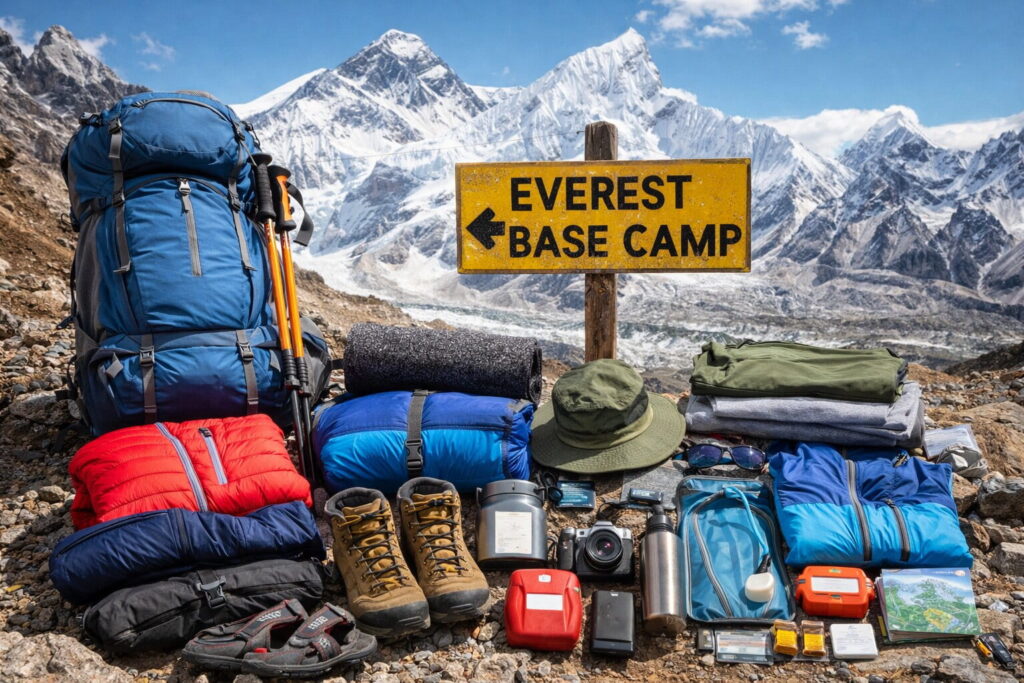
A three-layer clothing system works well for most trekkers.
Base Layers
Base layers are worn directly against your skin. Their job is to wick moisture away from your body and regulate temperature during long hikes.
Recommended base layer items include:
- 2–3 moisture-wicking hiking shirts
- 1–2 thermal long-sleeve tops
- base layer leggings
- breathable underwear
Merino wool and synthetic fabrics are ideal materials because they dry quickly and remain comfortable during long days of hiking.
Cotton clothing should be avoided because it absorbs moisture and dries slowly.
Mid Layers (Insulation)
Mid layers help retain body heat and keep you warm during colder parts of the trek.
Typical insulation layers include:
- fleece jacket or fleece pullover
- lightweight insulated jacket
- warm down jacket
A down jacket becomes essential during the evenings, especially above 4,000 meters, when temperatures can drop well below freezing.
Many trekkers bring a thicker down jacket specifically for higher altitudes.
Outer Shell Layer
Your outer shell protects you from wind, rain, and occasional snow.
Important shell items include:
- waterproof trekking jacket
- waterproof trekking pants
- windproof shell layer
Weather in the Himalayas can change quickly, so having reliable waterproof clothing is extremely important.
Trekking Pants and Daily Hiking Clothing
Comfortable trekking clothing will make the long hiking days much easier.
Most trekkers pack:
- 2 pairs of trekking pants
- thermal leggings for cold mornings
- 3–4 hiking shirts
- lightweight hiking shorts (optional)
- warm hat or beanie
- sun hat or cap
- warm gloves
Sun protection is particularly important in the Himalayas because the sun is much stronger at higher elevations.
Footwear for the Everest Base Camp Trek
Good footwear is one of the most important pieces of gear you will bring.
The trails to Everest Base Camp are not technical, but they involve long hiking days on rocky terrain and mountain paths.
Recommended footwear includes:
- waterproof trekking boots with ankle support
- 3–4 pairs of wool hiking socks
- liner socks (optional)
- lightweight camp shoes or sandals
Your trekking boots should be fully broken in before the trek begins. Wearing brand-new boots on the trail can easily lead to painful blisters.
Trekking poles are also very helpful for maintaining balance and reducing stress on your knees, especially during downhill sections.
Backpack and Bag Setup
Most trekkers bring two bags on the Everest Base Camp trek.
Duffel Bag
If you hire a porter, your main gear will be carried in a duffel bag.
This bag usually contains:
- spare clothing
- sleeping bag
- extra layers
- personal items
Porters generally carry loads of up to 15 kg (33 lbs).
Daypack
During the trek, you will carry a smaller backpack with essential items.
Recommended daypack size:
30–40 liters
Items commonly carried in a daypack include:
- water bottles
- snacks
- camera
- rain jacket
- sunscreen
- extra clothing layers
A comfortable daypack with padded shoulder straps is important because you’ll carry it for several hours each day.
Sleeping Gear
Accommodation on the Everest Base Camp trek usually consists of teahouses, which are simple mountain lodges run by local families.
Rooms are basic and typically not heated.
Because temperatures can drop significantly at higher elevations, most trekkers bring:
- a sleeping bag rated to -15°C to -20°C (5°F to -4°F)
- a sleeping bag liner
Even inside the lodges, nights can be very cold above 4,000 meters.
Hydration and Water Purification
Hydration is extremely important during high-altitude trekking.
Trekkers should aim to drink 3–4 liters of water each day.
Useful hydration items include:
- reusable water bottles
- hydration bladder
- electrolyte tablets
- water purification tablets or filter
Teahouses provide boiled drinking water, but many trekkers still use purification tablets as an additional precaution.
Drinking enough water helps your body acclimatize to the altitude and reduces the risk of altitude sickness.
Personal Hygiene and Health Items
Facilities along the trek are basic, so bringing a few hygiene items can help you stay comfortable.
Recommended items include:
- travel towel
- biodegradable soap
- hand sanitizer
- wet wipes
- toothbrush and toothpaste
- toilet paper
A small medical kit should include:
- blister treatment
- pain relief medication
- bandages
- antiseptic wipes
- altitude medication if recommended by your doctor
Altitude sickness can affect anyone, regardless of fitness level, so it’s important to ascend slowly and allow time for proper acclimatization.
Electronics and Useful Extras
Electricity is available in many villages along the trekking route, but charging devices may require a small fee.
Useful electronics include:
- power bank (10,000–20,000 mAh)
- charging cables
- headlamp with spare batteries
- smartphone or camera
A headlamp is particularly useful for early morning hikes or when the power goes out in mountain lodges.
Important Documents and Travel Essentials
Before starting the trek, make sure you have all necessary travel documents.
These include:
- passport
- trekking permits for the Everest region
- travel insurance that covers high-altitude trekking
Carrying cash in Nepali rupees is also important because credit cards are rarely accepted in mountain villages.
Common Packing Mistakes
Many trekkers make the mistake of packing far more gear than they actually need.
Items that are usually unnecessary include:
- heavy suitcases
- excessive clothing
- large electronics
- expensive jewelry
Keeping your gear lightweight will make every day on the trail much easier.
Remember that you will likely wear the same trekking clothes for several days.
Final Thoughts
The Everest Base Camp trek is one of the most incredible adventures a traveler can experience.
The journey takes you through dramatic Himalayan landscapes, traditional Sherpa villages, and some of the most spectacular mountain scenery on Earth.
Packing properly helps ensure that you stay comfortable, warm, and prepared for the changing conditions along the trail.
With the right gear, a steady pace, and proper acclimatization, the trek to Everest Base Camp becomes an unforgettable experience that many people consider the highlight of their travels.
Once you reach the base of the world’s tallest mountain, you’ll realize that every step along the trail was worth the effort.