

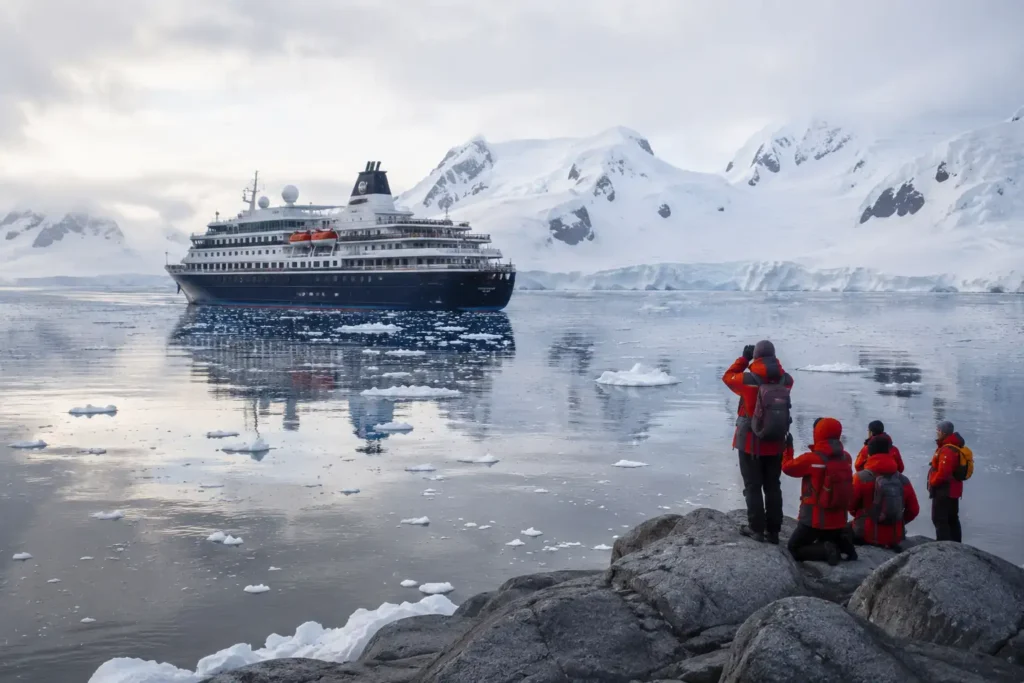
Visiting Antarctica is unlike any other travel experience on Earth.
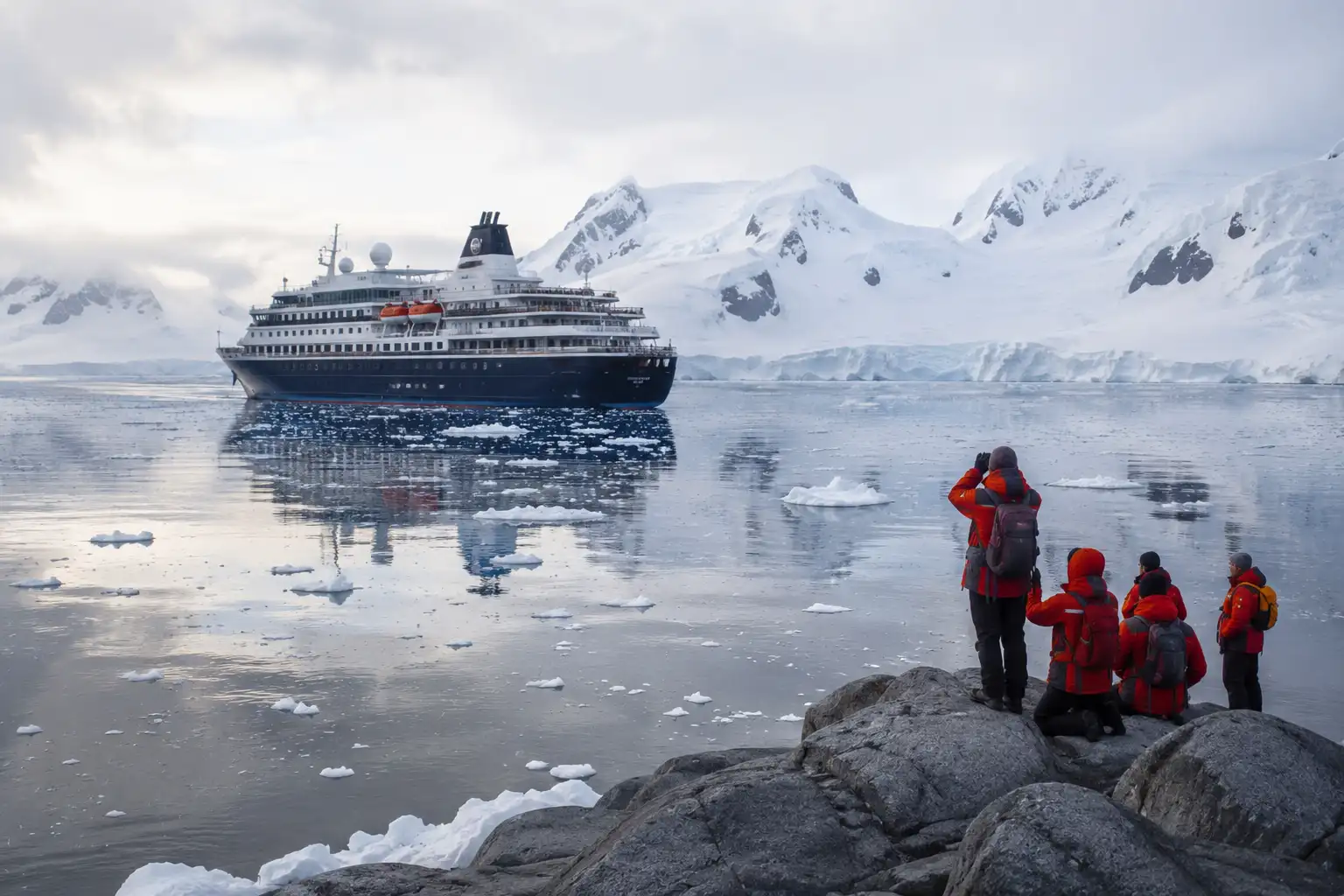
This is not a traditional vacation destination filled with resorts, shopping districts, or tourist attractions. Antarctica is the last true wilderness — a remote continent of towering glaciers, drifting icebergs, massive whale populations, and endless white landscapes untouched by permanent human settlement.
For many travelers, reaching Antarctica represents the ultimate expedition.
It is a journey to the edge of the planet itself.
But unlike destinations such as Peru, Tanzania, or Iceland, Antarctica cannot be explored independently. There are no roads, no hotels, and no commercial infrastructure waiting for visitors upon arrival.
Every traveler must arrive by expedition ship or specialized aircraft, and those vessels effectively become:
- Your transportation
- Your accommodation
- Your dining facility
- Your emergency shelter
- Your expedition base
- Your evacuation system
Because of these extreme logistical realities, Antarctica remains one of the most expensive adventure travel destinations in the world.
In 2026, Antarctica expedition pricing ranges anywhere from approximately $6,000 for basic shared-cabin voyages to over $50,000 for luxury polar expeditions visiting remote regions like South Georgia and the Falkland Islands.
And importantly:
The advertised cruise fare is only part of the true cost.
Flights, insurance, hotels, equipment, excursions, and hidden logistical expenses can add thousands more to your overall budget if you fail to plan carefully.
In this complete 2026 Antarctica expedition cost guide, we break down the major pricing tiers, explain what your money actually buys, uncover the hidden fees most travelers overlook, and share practical strategies for finding value without compromising safety or experience quality.
Why Antarctica Expeditions Are So Expensive
Many first-time travelers experience sticker shock when researching Antarctica.
The reason is simple:
Antarctica is one of the hardest places on Earth to operate safely.
Every expedition ship must comply with strict international environmental regulations while operating in one of the harshest climates on the planet.
Operating costs include:
- Ice-strengthened ships
- Specialized crews
- Expedition leaders
- Satellite communications
- Emergency medical systems
- Polar-trained staff
- Zodiac landing craft
- Fuel transportation
- Environmental compliance
In addition, Antarctica’s short tourism season creates limited supply.
The operating season generally lasts from:
- November through March
Outside this window, heavy ice and severe storms make tourism largely impossible.
This limited season, combined with rising global demand, naturally increases pricing.
Understanding Antarctica Pricing Tiers (2026)
Antarctica expedition pricing depends primarily on:
- Ship size
- Cabin category
- Route length
- Luxury level
- Included activities
- Destination complexity
Here is a breakdown of typical 2026 pricing categories.
Budget Expeditions
Estimated Cost:
$6,000 – $9,000 per person
What to Expect:
- Older expedition vessels
- Shared cabins
- Basic amenities
- Fewer onboard luxuries
- Smaller public spaces
Budget trips still deliver incredible wildlife and scenery experiences.
However, accommodations are simpler and comfort levels are lower.
Mid-Range Expeditions
Estimated Cost:
$10,000 – $18,000 per person
What to Expect:
- Modern expedition ships
- Private cabins
- Better food quality
- Larger observation decks
- Expert naturalists
- Improved onboard comfort
This category offers the best balance for many travelers.
Luxury Antarctica Cruises
Estimated Cost:
$20,000 – $30,000+ per person
What to Expect:
- All-suite accommodations
- Fine dining
- Spa facilities
- Premium lecture programs
- High staff-to-guest ratios
- Inclusive alcohol packages
- Enhanced excursion access
Luxury ships focus heavily on comfort while still maintaining expedition capability.
Extended Remote Expeditions
Estimated Cost:
$25,000 – $50,000+
What to Expect:
- South Georgia visits
- Falkland Islands itineraries
- Longer voyages
- Rare wildlife encounters
- Advanced expedition programming
These longer itineraries appeal to experienced polar travelers seeking deeper exploration.
The Most Popular Antarctica Itinerary: Peninsula Cruises
The classic “first-time Antarctica” route visits the Antarctic Peninsula.
Typical duration:
10–12 days
This usually includes:
- Drake Passage crossing
- Zodiac landings
- Penguin colonies
- Whale watching
- Iceberg exploration
Average 2026 pricing:
$7,000 – $12,000
This remains the most accessible and popular Antarctica experience.
Fly-Cruise Antarctica Expeditions
Some travelers prefer avoiding the infamous Drake Passage crossing.
Fly-cruise itineraries solve this problem by flying passengers directly to Antarctica before boarding the ship.
Advantages include:
- Faster travel
- Less seasickness
- Shorter itineraries
- More time in Antarctica itself
However, these expeditions cost significantly more.
Typical 2026 pricing:
$12,000 – $18,000+
for shorter 6–8 day itineraries.
The Biggest Hidden Costs of Antarctica Travel
One of the most important budgeting lessons for Antarctica travel is understanding that the cruise fare itself is only the beginning.
Many travelers underestimate total trip expenses by several thousand dollars.
International Flights to South America
Most Antarctica expeditions depart from:
- Ushuaia, Argentina
- Punta Arenas, Chile
Getting there can become expensive depending on your origin country.
Flights to South America often represent the second-largest expense after the expedition itself.
Internal Flights
Some itineraries require additional regional flights between:
- Buenos Aires
- Santiago
- Ushuaia
- Punta Arenas
Not all operators include these flights.
Typical costs:
$400 – $1,000+
Pre-Expedition Hotels
You should never arrive on embarkation day itself.
Weather delays and airline issues are common in South America.
Most experienced travelers arrive:
- 1–2 days early
This adds:
- Hotel costs
- Meals
- Airport transfers
Mandatory Polar Insurance
Standard travel insurance is usually insufficient.
Most Antarctica operators require specialized emergency evacuation coverage.
Recommended minimum evacuation coverage:
$500,000 USD
Why?
Because Antarctica is extraordinarily remote.
A medical evacuation may involve:
- Specialized aircraft
- International coordination
- Ship diversions
- Emergency rescue logistics
Medical evacuations in Antarctica can cost hundreds of thousands of dollars.
Adventure Activity Add-Ons
Many premium activities are not included in the standard cruise fare.
Sea Kayaking
Estimated Cost:
$800 – $1,800
Usually requires advance reservation.
Overnight Camping
Estimated Cost:
$300 – $500
Extremely popular and highly limited.
Scuba Diving and Mountaineering
Estimated Cost:
$2,000+
Only available on select expedition vessels.
Alcohol and Premium Dining
Some ships include drinks and premium dining experiences.
Others charge separately.
These costs accumulate quickly during longer voyages.
Gratuities
Crew tipping is expected on most expedition cruises.
Suggested gratuities often range from:
$15 – $25 per guest per day
On a longer voyage, this can add several hundred dollars.
Why Smaller Ships Often Provide Better Experiences
Antarctica tourism regulations limit the number of passengers allowed ashore simultaneously.
Ships carrying:
- Fewer than 200 passengers
can usually conduct faster, more flexible landings.
Larger ships may face:
- Longer wait times
- More crowded excursions
- Reduced landing opportunities
Smaller expedition vessels often provide more immersive experiences despite having fewer luxury amenities.
How to Find Value in Antarctica Without Sacrificing Quality
Although Antarctica is expensive, there are still ways to maximize value.
Travel During Late Season (February–March)
Late-season departures often offer lower pricing.
Benefits include:
- Better whale sightings
- Dramatic lighting
- Fewer crowds
- Discounted cabins
Tradeoff:
Some penguin chick activity has already passed.
Watch for Last-Minute Deals
Expedition operators rarely want empty cabins.
If you have flexibility, you can sometimes find:
- 20–30% discounts
- Last-minute cabin sales
- Upgrade offers
within 60–90 days of departure.
Compare What Is Actually Included
A cheaper cruise is not always the better value.
One operator may include:
- Gear rentals
- Alcohol
- Excursions
- Park fees
- Airport transfers
while another charges separately for everything.
Always compare final estimated totals rather than just headline pricing.
Packing for Antarctica: Essential Gear Considerations
Most expedition ships provide:
- Waterproof expedition parkas
- Rubber boots
But travelers remain responsible for everything else.
The Layering System
Proper layering is critical in Antarctica.
Recommended system:
Base Layer
Moisture-wicking thermal clothing.
Avoid cotton completely.
Mid Layer
Fleece or insulated synthetic layer.
Outer Layer
Waterproof shell protection.
Weather conditions can change rapidly during Zodiac landings.
Gloves Matter More Than You Think
Cold wind combined with photography quickly freezes hands.
Bring:
- Waterproof gloves
- Thin liner gloves
- Backup gloves
Wet gloves become miserable quickly.
Protect Your Camera Batteries
Polar cold drains batteries rapidly.
Always carry:
- Multiple spare batteries
- Stored inside warm interior pockets
This simple trick prevents equipment failure during wildlife encounters.
Sunglasses and Sunscreen Are Essential
The Antarctic environment creates intense reflected sunlight.
Snow and ice amplify UV exposure dramatically.
Bring:
- Polarized sunglasses
- High-SPF sunscreen
- Lip protection
even on cloudy days.
The Reality of the Drake Passage
The Drake Passage is one of the roughest ocean crossings in the world.
Crossing time:
Approximately 2 days each direction.
Some travelers experience calm seas.
Others encounter:
- Massive waves
- Severe seasickness
- Rough conditions
If you are highly prone to motion sickness, consider:
- Prescription medication
- Fly-cruise itineraries
- Ships with stabilizers
Why Antarctica Is Not a Luxury Vacation in the Traditional Sense
Even luxury Antarctica expeditions remain fundamentally expedition travel.
Weather dictates everything.
Landings may change.
Schedules shift constantly.
Wildlife encounters are unpredictable.
Flexibility and adaptability are part of the experience.
Travelers seeking perfectly structured resort-style vacations may struggle with the unpredictability of polar exploration.
Is Antarctica Worth the Cost?
This is the question nearly every traveler asks before booking.
And for most people who go:
The answer is yes.
Antarctica provides experiences impossible to replicate elsewhere:
- Massive iceberg fields
- Thousands of penguins
- Breaching whales
- Total silence
- Endless polar landscapes
More importantly, Antarctica changes perspective.
Many travelers describe the experience as:
- Humbling
- Emotional
- Transformational
Very few places on Earth still feel completely untouched by civilization.
Antarctica remains one of them.
Final Advice for Planning Your Antarctica Expedition
The key to planning Antarctica successfully is budgeting realistically from the beginning.
Do not focus solely on the advertised cruise fare.
Instead, calculate:
- Flights
- Hotels
- Insurance
- Excursions
- Equipment
- Gratuities
- Emergency contingencies
Booking with reputable expedition operators is also critical.
The cheapest option is rarely the best value when operating in one of the most extreme environments on Earth.
If you are ready to start planning your 2026 or 2027 expedition, monitor our Extreme Travel for vetted polar expedition partners, planning resources, and seasonal Antarctica travel updates.