Preparing Your Gear for the Annapurna Trek
Planning a trek in the Annapurna region is exciting, but one of the first practical questions most travelers ask is simple:
What should I pack for the Annapurna trek?
Packing for a Himalayan trek can feel confusing, especially if it’s your first time trekking at altitude. You might see gear lists online that look like they belong to a serious mountaineering expedition. In reality, most Annapurna treks do not require extremely technical equipment.
However, the environment in the Himalayas is very different from normal hiking destinations. Weather can change quickly, temperatures vary significantly with altitude, and you will be hiking for several days in a row.
Because of this, the key idea when packing is not to bring more gear, but to bring the right gear.
Most trekkers aim to keep their main bag under 10–12 kg (22–26 lbs) if they are using a porter. Carrying too much weight will make the trek unnecessarily difficult, especially as the elevation increases.
With a well-planned packing list, you can stay comfortable, warm, and prepared while keeping your pack light.
Understanding Weather in the Annapurna Region
Before deciding what to pack, it helps to understand what conditions you may encounter during the trek.
The Annapurna region covers a wide range of elevations, from around 800 meters in the lower valleys to over 5,000 meters at high mountain passes.
Because of this elevation difference, the climate changes dramatically during the trek.
At lower elevations you may experience:
• warm daytime temperatures
• humid forests
• terraced farmland and villages
Higher on the trail you will encounter:
• cooler temperatures
• strong mountain sun
• cold mornings and evenings
At elevations above 3,500 meters, nights can become quite cold, especially during the spring and autumn trekking seasons.
This is why experienced trekkers rely on layering systems rather than heavy clothing.
Layering allows you to adjust quickly as temperatures change throughout the day.
Clothing System for the Annapurna Trek
A simple three-layer clothing system works well for most Himalayan treks.
Base Layers
Base layers are worn directly against your skin. Their main job is to regulate body temperature and move moisture away from your body while hiking.
Recommended base layer items include:
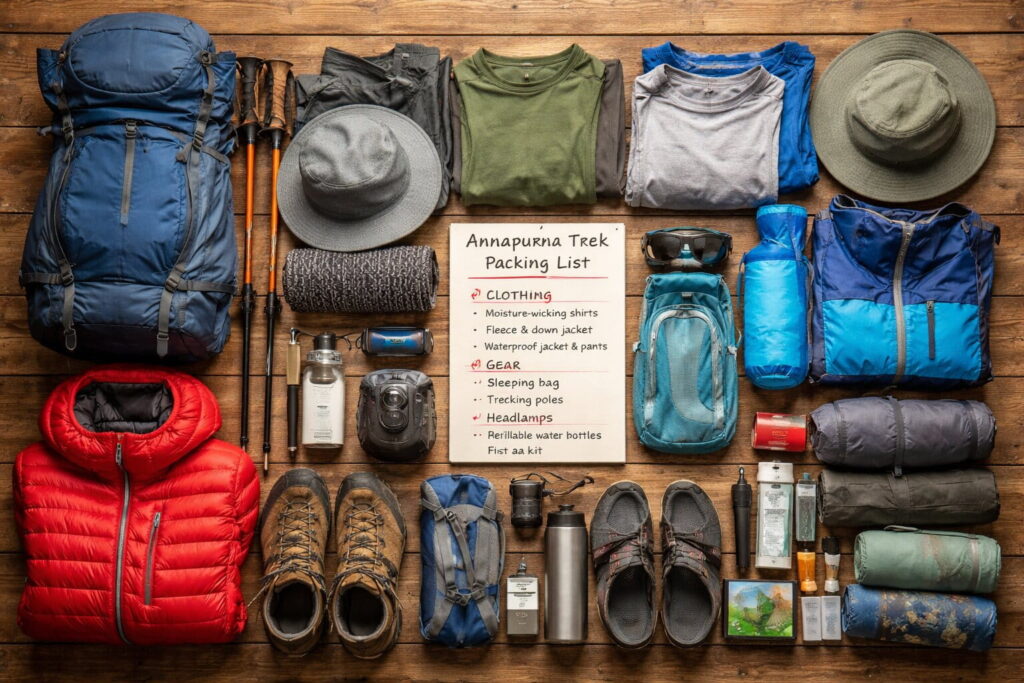
• 2–3 moisture-wicking hiking shirts
• 1–2 thermal long-sleeve tops
• lightweight hiking underwear
• sports bra or athletic base layers
Materials such as merino wool or synthetic fabrics are ideal because they dry quickly and stay comfortable during long hiking days.
Cotton clothing should generally be avoided because it absorbs moisture and dries slowly, which can make you feel cold at higher elevations.
Mid Layers (Insulation)
Mid layers provide warmth when temperatures drop, especially during mornings, evenings, and rest stops.
Common insulation layers include:
• fleece jacket or pullover
• lightweight insulated jacket
• warm down jacket for higher elevations
A down jacket becomes especially useful above 3,000 meters, where temperatures can drop significantly after sunset.
Even if the daytime weather feels warm while hiking, evenings in mountain villages can become cold very quickly.
Outer Shell Layer
The outer shell protects you from wind, rain, and occasional snow.
Essential outer layers include:
• waterproof trekking jacket
• waterproof trekking pants
• windproof shell jacket
Weather conditions in the Himalayas can change rapidly. A waterproof jacket is one of the most important pieces of gear you can bring.
It protects not only against rain, but also against cold mountain winds.
Trekking Pants and Daily Hiking Clothing
For daily trekking, comfort and flexibility are important.
Most trekkers pack:
• 2 pairs of trekking pants
• 1 pair of thermal leggings
• 3–4 hiking shirts
• lightweight hiking shorts (optional)
• warm hat or beanie
• sun hat or cap
• lightweight gloves
Temperatures can change dramatically during the day, especially if the trail moves between forests, open valleys, and higher alpine areas.
Layering your clothing makes it easier to adapt to these changes.
Footwear for the Annapurna Trek
Footwear is one of the most important parts of your trekking gear.
Trails in the Annapurna region often include:
• rocky terrain
• uneven paths
• long stone staircases
• dirt trails and mountain paths
Recommended footwear includes:
• waterproof trekking boots with ankle support
• 3–4 pairs of wool hiking socks
• thin liner socks (optional)
• camp shoes or lightweight sandals
Your boots should be well broken in before the trek begins. New boots can easily cause blisters during long hiking days.
Many trekkers also find trekking poles helpful, especially for steep descents and long downhill sections.
Backpack and Bag System
Most trekkers use two bags during an Annapurna trek.
Main Duffel Bag
If you hire a porter, your main gear is carried in a duffel bag.
This bag usually contains:
• spare clothing
• sleeping gear
• personal items
• extra layers
Most trekking companies limit porter loads to around 15 kg (33 lbs).
Daypack
You will carry a smaller backpack during the day.
A daypack should typically hold 30–40 liters.
Items usually carried in the daypack include:
• water bottles
• snacks
• rain jacket
• sunscreen
• camera
• extra layers
A comfortable daypack with good shoulder support is important because you will carry it for several hours each day.
Hydration and Water Safety
Staying hydrated is extremely important when trekking at altitude.
Most trekkers try to drink 3–4 liters of water per day.
Useful hydration items include:
• reusable water bottles
• hydration bladder
• electrolyte tablets
• water purification tablets or filter
Teahouses along the route often provide boiled drinking water, but many trekkers still carry purification tablets as an extra precaution.
Drinking enough water helps your body adjust to altitude and reduces the risk of altitude sickness.
Sleeping Gear
Accommodation on Annapurna treks usually takes place in teahouses, which are small mountain lodges operated by local families.
Rooms are simple and often not heated.
Recommended sleeping gear includes:
• sleeping bag rated to about -10°C to -15°C
• sleeping bag liner
• small travel pillow (optional)
Even inside teahouses, nights can become cold at higher elevations.
A warm sleeping bag ensures you stay comfortable during the trek.
Personal Hygiene and Health Items
Facilities in mountain villages are basic, so bringing a few personal hygiene items can make the trek more comfortable.
Recommended items include:
• travel towel
• biodegradable soap
• hand sanitizer
• wet wipes
• toothbrush and toothpaste
• toilet paper
A small medical kit should also include:
• blister treatment
• pain relief medication
• bandages
• antiseptic wipes
• altitude medication if recommended by your doctor
Altitude sickness affects people differently, so it’s always best to consult a medical professional before your trip.
Electronics and Useful Extras
Electricity is available in many villages along the trekking routes, but charging devices may require a small fee.
Useful electronics include:
• power bank (10,000–20,000 mAh)
• charging cables
• headlamp with spare batteries
• smartphone or camera
A headlamp is especially helpful for early morning departures or if the electricity goes out in the evening.
Important Documents and Travel Essentials
Before starting the trek, make sure you have the necessary documents.
These include:
• passport
• trekking permits for the Annapurna region
• travel insurance that covers high-altitude trekking
It’s also helpful to carry some cash in Nepali rupees for meals, supplies, and small purchases in mountain villages.
Credit cards are rarely accepted at higher elevations.
Common Packing Mistakes
Many trekkers pack far more gear than they actually need.
Some items that are usually unnecessary include:
• heavy suitcases
• excessive clothing
• large electronics
• expensive jewelry
Keeping your gear simple and lightweight will make the trek much more enjoyable.
You will likely wear the same trekking clothes for several days, and laundry opportunities are limited.
Final Thoughts
Packing for the Annapurna trek doesn’t need to be complicated.
The goal is simply to stay warm, dry, and comfortable while hiking through the mountains.
With a thoughtful packing list, good footwear, and a simple layering system, most trekkers are well prepared for the journey.
The Annapurna region offers one of the most beautiful trekking experiences in the world. Snow-covered peaks, traditional villages, and dramatic landscapes create a journey that stays with travelers long after the trek is finished.
Once you’re on the trail, you’ll quickly realize that the most important things you bring aren’t in your backpack — they are your curiosity, patience, and appreciation for the incredible mountain environment around you.