
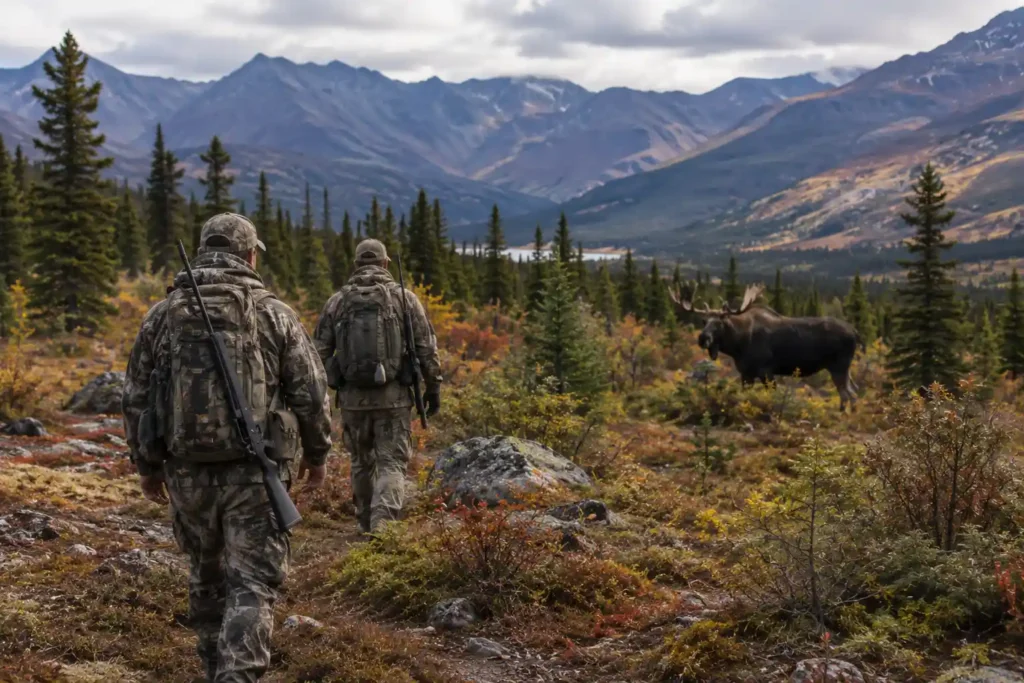
For serious hunters around the world, Canada is the ultimate frontier. With millions of acres of pristine, untouched wilderness stretching from the dense boreal forests of British Columbia to the sweeping prairies of Alberta and the rocky coasts of Newfoundland, Canada offers big game hunting opportunities that simply cannot be found anywhere else on Earth.
Whether you are dreaming of calling in a massive bull moose during the rut, spotting a trophy black bear, or sitting in a frozen blind waiting for a monster Alberta whitetail, a Canadian hunting trip is a bucket-list adventure. But when you start researching outfitters and lodges, the first and most critical question always arises: What is the actual hunting Canada cost?
Budgeting for a Canadian hunt is far more complex than booking a standard vacation. The price tag is heavily influenced by the species you are targeting, the province you are hunting in, the duration of the hunt, and the ratio of guides to hunters. Furthermore, the base outfitter package is just the beginning—you must also account for government licenses, species tags, travel logistics, meat processing, and taxidermy.
In this comprehensive 2026 guide, we will break down exactly how much you can expect to spend on a guided hunting trip in Canada, examine the costs species-by-species, and uncover the hidden fees that catch many first-time visiting hunters off guard.
Why Non-Residents Must Use an Outfitter
Before breaking down the numbers, it is crucial to understand Canadian hunting laws. If you are a non-resident of Canada (such as a US citizen or European traveler), you cannot simply buy a tag, drive into the wilderness, and hunt big game on your own.
With very few exceptions, all non-resident alien hunters are legally required to hire a licensed outfitter and a professional guide to hunt big game (like moose, bear, elk, and sheep) in Canada.
While this mandatory regulation significantly increases the baseline cost of your trip compared to a DIY hunt in the United States, it ensures a high success rate, promotes safety in remote and dangerous terrain, and heavily supports local conservation efforts. When you pay for a Canadian hunt, you are paying for expert local knowledge, exclusive territory access, and extensive logistical support.
To explore specific outfitter packages and start planning your trip, visit our main Hunting Trips Canada.
Cost Breakdown by Big Game Species
The single biggest factor dictating your hunting Canada cost is the animal you are pursuing. Below are the average 2026 outfitter prices for a standard 6-to-8-day fully guided hunt.
Note: These prices are generally listed in USD, as the vast majority of outfitters cater to the American market.
1. Moose Hunting Costs ($6,500 – $17,500+)
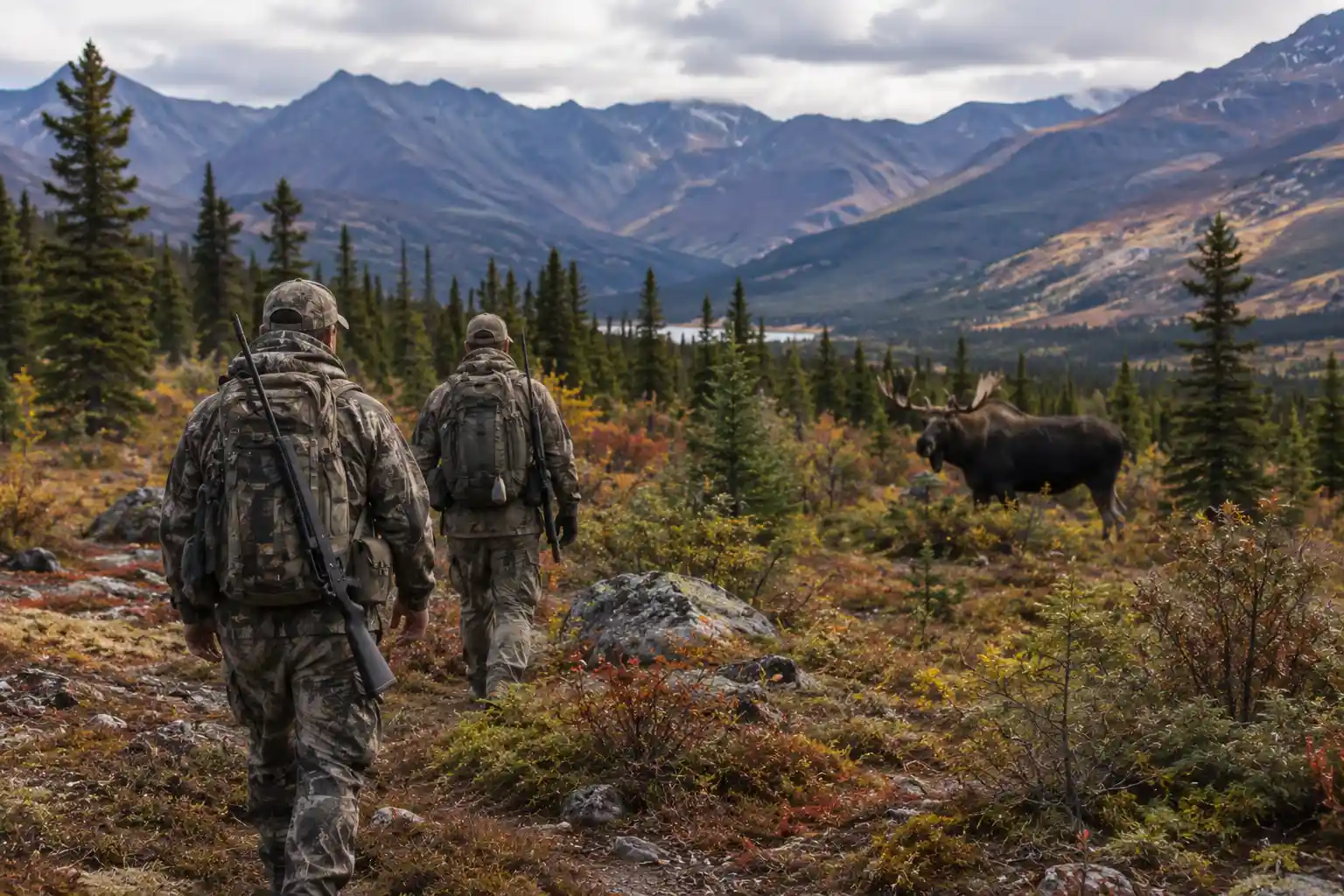
Canada is globally renowned for its moose hunting, but prices vary wildly depending on the subspecies and the location.
- Eastern Moose (Newfoundland): Newfoundland has the highest density of moose in North America. These hunts are generally the most affordable, averaging $6,500 to $8,500 for a 6-day hunt. Success rates are exceptionally high.
- Western Canada Moose (Alberta/Saskatchewan): These animals are larger than their Eastern cousins. A rut hunt (late September to early October) typically costs between $9,000 and $13,000.
- Canadian/Alaska-Yukon Moose (British Columbia/Yukon): If you want a true monster with a 50-inch+ spread, you need to head far west or north. Because these hunts require float planes or horseback riding to access remote territories, they are highly expensive. Expect to pay $15,000 to $18,000+.
2. Black Bear Hunting Costs ($3,500 – $6,500)
Black bear hunting is one of the most accessible and popular ways to experience the Canadian wilderness. Canada boasts massive black bear populations, particularly in provinces like Alberta, British Columbia, and Manitoba.
- Spring Baited Hunts (Alberta/Saskatchewan): Hunting over established bait sites in May or June is highly successful and excellent for archery hunters. These typically cost $4,000 to $5,500.
- Spot and Stalk Hunts (British Columbia): Spotting bears feeding on fresh spring grass on logging roads or alpine meadows is an active, thrilling hunt. These usually run $4,500 to $6,500.
- Two-Bear Packages: Many outfitters operate in zones where hunters are legally allowed to harvest two bears. Adding a second bear tag usually incurs a trophy fee of $1,000 to $1,500.
3. Whitetail and Mule Deer Costs ($5,500 – $17,500)
Western Canada, particularly Alberta and Saskatchewan, is legendary for producing heavy-horned, massive-bodied deer that routinely break record books.
- Alberta/Saskatchewan Whitetail: Hunting the November rut in the freezing boreal fringe requires mental toughness, but the reward is a potential 170+ inch buck. A standard 6-day whitetail hunt costs $5,500 to $7,500.
- Alberta Mule Deer: Mule deer tags are highly restricted for outfitters, making them a premium hunt. A spot-and-stalk archery or rifle mule deer hunt is highly coveted and can range from $7,500 to $17,500, depending on the exclusivity of the zone and the trophy potential.
4. Elk Hunting Costs ($7,500 – $12,000)
Calling in a screaming bull elk during the September rut is arguably the most adrenaline-pumping experience in North American hunting. Alberta and British Columbia offer incredible elk hunting, often conducted on horseback or via ATV. A 6-to-8 day rut hunt generally costs between $7,500 and $12,000.
5. Waterfowl Hunting Costs ($2,500 – $4,000)
If you prefer shotguns to rifles, Canada’s prairie provinces (Alberta, Saskatchewan, and Manitoba) are the breeding grounds for millions of ducks and geese. A 3-to-4 day guided waterfowl hunt, complete with elaborate decoy spreads, heated blinds, and expert callers, typically costs $2,500 to $4,000.
For a broader look at different styles of outfitted adventures, check out our Guided Hunting Trips.
1×1 vs. 2×1 Guided Hunts: How Ratios Affect Price
When reviewing outfitter price lists, you will constantly see the terms “1×1” and “2×1”. This refers to the guide-to-hunter ratio, and it significantly impacts your bottom line.
- 1×1 Guided Hunt: You have your own dedicated professional guide. This is ideal for serious trophy hunters, archery hunters, or those who want a completely customized pace. Because you are absorbing the guide’s full salary for the week, this is the most expensive option.
- 2×1 Guided Hunt: Two hunters share one guide. This is perfect for fathers and sons, spouses, or best friends. Because the guide’s daily rate is split between two paying clients, a 2×1 hunt usually saves each hunter $1,500 to $3,000 off the total package price.
What is Usually Included in an Outfitter Package?
When you pay $8,000 for a hunt, what are you actually getting? While every outfitter is different, a standard reputable package includes:
- Lodging: Ranging from rustic wall tents with wood stoves to luxurious log cabins with Wi-Fi and hot showers.
- Meals: Breakfast, packed field lunches, and hearty, home-cooked dinners.
- Transportation During the Hunt: Use of the outfitter’s 4×4 trucks, ATVs, Argos, or horses to access the hunting grounds.
- Professional Guiding: The expertise of a local guide to locate animals, judge trophy size, and ensure your safety.
- Field Preparation: Once an animal is down, the guide handles the skinning, quartering, and packing of the meat, as well as preparing the hide and antlers for the taxidermist.
The Hidden Costs: What is NOT Included
The base price listed on an outfitter’s website is never the final amount you will spend. To calculate your true hunting Canada cost, you must factor in the following “hidden” expenses.
1. Licenses and Species Tags ($350 – $900)
Outfitters rarely include the cost of government licenses in their base price. You must purchase a non-resident hunting license and a specific tag for your animal.
- A black bear tag and license might cost $350.
- A moose or elk tag can cost upwards of $600 to $900 depending on the province.
2. Government Taxes (5% GST)
Canada charges a 5% Goods and Services Tax (GST) on almost all goods and services, including hunting packages. If your hunt costs $10,000, you will be paying an additional $500 in taxes right off the bat.
3. Travel and Flights ($800 – $2,000)
You have to get to camp. This might involve a commercial flight to a major hub like Edmonton or Calgary, followed by a rental car or a bush plane flight into a remote camp. Furthermore, most outfitters require you to arrive a day early, necessitating a night in a hotel before and after the hunt.
4. Gratuities / Tipping ($500 – $1,500)
Tipping your guide and the camp staff is a standard, expected practice in the hunting industry. The general rule of thumb is to tip 10% to 15% of the total hunt cost. For a $10,000 moose hunt, you should bring $1,000 to $1,500 in cash to split between your primary guide and the camp cook.
5. Meat Processing and Trophy Export ($500 – $2,000+)
If you are successful, getting your meat and antlers home is an entirely separate logistical and financial hurdle.
- Local butchers charge several hundred dollars to process, vacuum seal, and freeze your meat.
- Shipping hundreds of pounds of frozen meat back to the United States via specialized freight can cost $500 to $1,000+.
- You must either pay a local Canadian taxidermist to mount your trophy (and then pay to ship it across the border) or pay an expediter to clean the skull, salt the hide, secure export permits, and ship the raw parts to your local taxidermist at home.
6. Travel Insurance
Because Canadian hunts are often booked one to two years in advance and require hefty, non-refundable deposits, purchasing comprehensive trip cancellation and medical evacuation insurance is highly recommended. To understand what policies cover hunting injuries and trip delays, review our comprehensive Travel insurance guide.
Conclusion: Planning Your Budget
A hunting trip to Canada is a major financial investment, but for those who value pristine wilderness, exceptional game management, and the thrill of the chase, it is worth every penny.
When establishing your budget, take the outfitter’s base price and add roughly 30% to 40% to cover your flights, tags, taxes, tips, and meat shipping. By planning ahead and understanding the full scope of the hunting Canada cost, you can focus entirely on the experience rather than stressing over unexpected bills when you arrive at camp.
If you are ready to stop dreaming and start planning, reach out to the team at WeGoExplore365. We partner with the most reputable, high-success outfitters across Canada to match you with the perfect wilderness adventure.