




Packing for Antarctica is completely different from packing for a normal vacation.
You are not simply preparing for a cruise ship holiday with scenic views and relaxing beaches. You are preparing for an expedition into one of the harshest, coldest, windiest, and most unpredictable environments on Earth.
One moment, you may be standing under brilliant sunshine while photographing penguins beside towering blue icebergs.
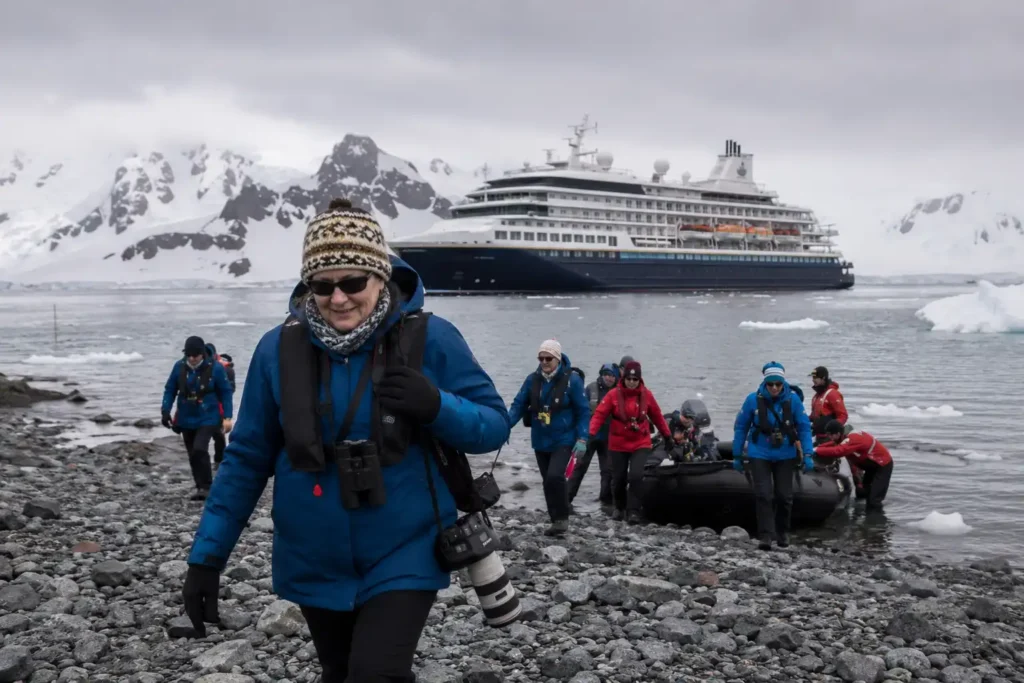
An hour later, you may be sitting in a freezing Zodiac boat with icy seawater splashing across your outer layers while Antarctic winds rip across the ocean.
That is why successful Antarctica packing is not about bringing the biggest winter coat you can find.
The secret is layering.
You need clothing and gear that keep you:
- Warm
- Dry
- Mobile
- Comfortable
- Adaptable to changing weather
In this complete 2026 Antarctica packing guide, we break down exactly what to bring, what most cruise lines provide, the gear mistakes first-time travelers make, and the essential items experienced polar expedition travelers never leave behind.
Why Antarctica Packing Is Different
Antarctica combines several extreme environmental factors simultaneously:
- Freezing temperatures
- Strong winds
- Wet Zodiac landings
- Snow glare
- Constant weather changes
- Dry air
- Rough ocean conditions
Most travelers underestimate one of these elements.
Usually, they either:
- Overpack bulky winter clothing
or - Underestimate the need for waterproof gear
The goal is to remain warm without becoming sweaty or restricted.
Overheating can actually become dangerous in polar environments because trapped sweat quickly turns cold once activity slows down.
That is why professional expedition travelers focus heavily on breathable layering systems.
Step One: Check What Your Cruise Provides
Before buying expensive cold-weather equipment, carefully review your expedition contract.
Most modern Antarctica expedition lines already provide several major gear items.
This is especially common with premium operators.
Gear Commonly Provided by Expedition Cruises
Many Antarctic cruise operators provide:
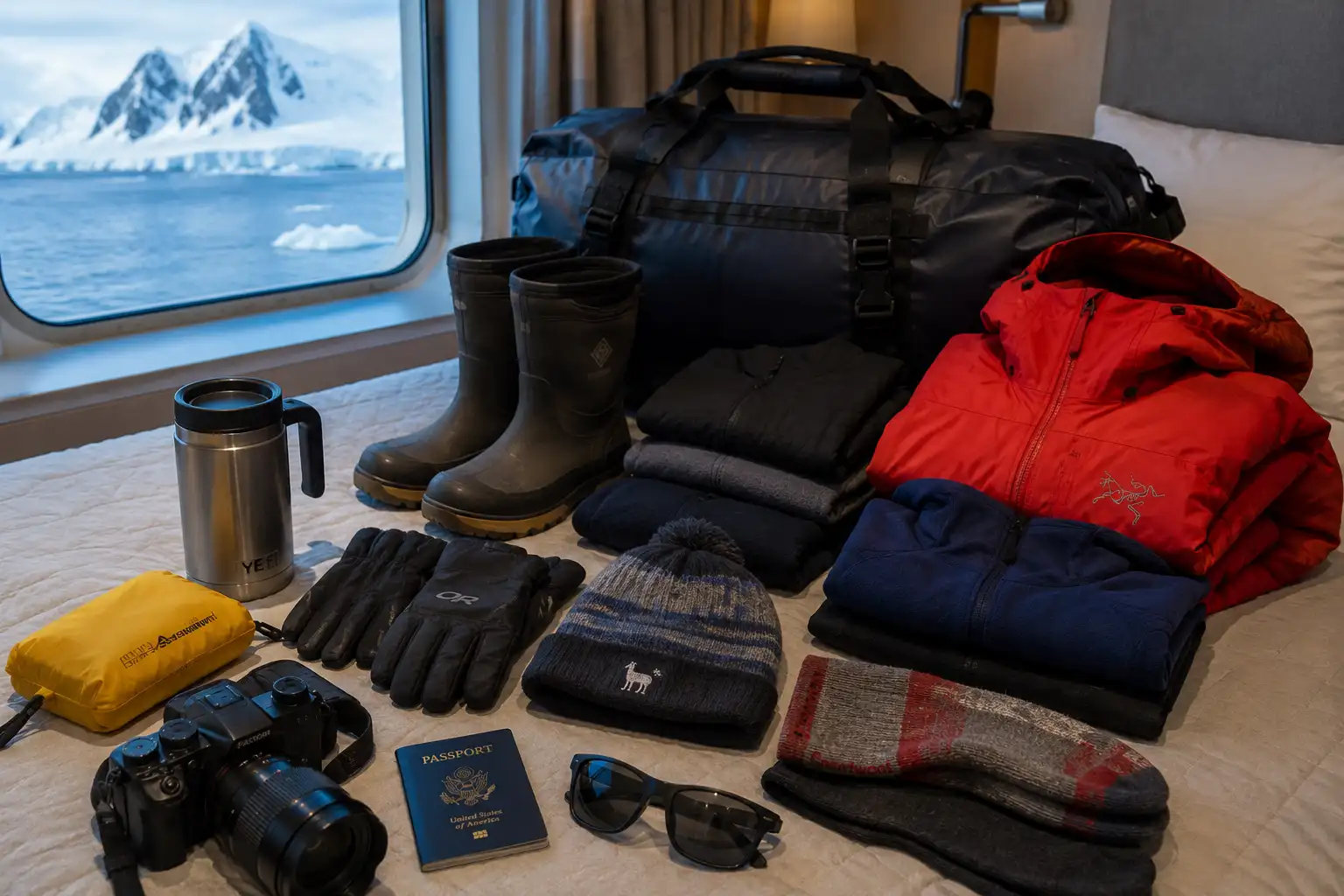
- Expedition parkas
- Waterproof outer jackets
- Insulated rubber boots
- Landing boots for Zodiac excursions
Cruise lines often allow you to keep the expedition parka after the voyage.
This becomes a great souvenir and saves massive luggage space.
Why This Matters
If your operator provides these items:
DO NOT pack:
- Heavy ski jackets
- Bulky snow boots
- Large winter parkas
These items take up enormous luggage space and are usually unnecessary.
Always verify exactly what is included before purchasing additional gear.
The Antarctica Layering System Explained
The most important concept in polar packing is layering.
Instead of relying on one massive coat, you use multiple thinner layers that work together.
This system allows you to adjust quickly depending on conditions.
The Three Essential Layers
1. Base Layer
The base layer sits directly against your skin.
Its job is to:
- Wick moisture away
- Keep sweat from cooling your body
- Regulate temperature
Best materials:
- Merino wool
- Synthetic polyester blends
- Polypropylene fabrics
Avoid cotton completely.
Cotton traps moisture and becomes dangerously cold once wet.
2. Mid Layer
The mid layer provides insulation.
Its purpose is to trap body heat.
Common options include:
- Fleece jackets
- Lightweight down jackets
- Synthetic insulated pullovers
This layer should feel warm but breathable.
3. Outer Layer
The outer layer protects you from:
- Wind
- Snow
- Rain
- Ocean spray
This layer must be:
- Waterproof
- Windproof
- Durable
If your ship does not provide a waterproof shell, you must bring one.
Why Layering Works Better Than Heavy Coats
Layering allows flexibility.
For example:
During a sunny landing, you may only need:
- Base layer
- Fleece
But during a windy Zodiac ride, you may require:
- Base layer
- Mid layer
- Expedition parka
- Waterproof shell
This adaptability is critical in Antarctica.
Essential Antarctica Clothing Checklist
Waterproof Pants
Waterproof pants are non-negotiable.
You will likely encounter:
- Snow
- Wet docks
- Ocean spray
- Slushy landings
Your pants should be:
- Fully waterproof
- Wind-resistant
- Comfortable for walking
- Large enough to fit over thermal layers
Do not rely on “water-resistant” hiking pants.
They are not sufficient for Antarctica.
Thermal Leggings
Bring at least:
2–3 pairs
of thermal leggings or insulated base-layer pants.
Merino wool works exceptionally well.
Fleece Jacket or Puffy Layer
A lightweight insulated layer is essential.
This becomes your primary warmth layer beneath the waterproof shell.
Down jackets are excellent for dry cold conditions, but synthetic insulation performs better if wet.
Wool Socks
Your feet must stay warm and dry.
Pack:
- 4–5 pairs of merino wool socks
Avoid thin cotton athletic socks.
Merino wool remains warm even when damp.
Gloves: The Most Overlooked Item
Gloves are incredibly important in Antarctica.
Your hands will constantly alternate between:
- Handling cameras
- Holding railings
- Removing layers
- Gripping Zodiac ropes
The Two-Glove System
Experienced travelers bring:
Thin Liner Gloves
Used for:
- Photography
- Phone operation
- Fine motor tasks
Thick Waterproof Outer Gloves
Used during:
- Zodiac rides
- Snowy conditions
- Wind exposure
This dual-layer system works far better than one bulky glove.
Why Backup Gloves Matter
Gloves get wet easily.
Always pack at least:
2 waterproof pairs
If one pair becomes soaked, your comfort drops dramatically.
Headwear Essentials
Beanie or Wool Hat
A snug-fitting beanie is critical.
Antarctic winds are extremely powerful.
Loose hats often blow away instantly.
Neck Gaiter or Buff
A neck gaiter is far better than a scarf.
Scarves flap in the wind and become annoying quickly.
A fleece-lined buff provides:
- Neck warmth
- Wind protection
- Face coverage during storms
Sunglasses and Snow Protection
Many travelers underestimate Antarctica’s sunlight intensity.
Snow and ice reflect UV radiation aggressively.
This creates a “double-sun” effect.
Polarized Sunglasses
High-quality polarized sunglasses are mandatory.
They help:
- Reduce glare
- Prevent snow blindness
- Improve visibility on water
Sunscreen Is Essential
Even in freezing temperatures, sunburn happens fast.
Bring:
- SPF 50+ sunscreen
- SPF lip balm
Apply repeatedly throughout the day.
Antarctica Footwear Guide
Expedition Boots
Most ships provide insulated rubber boots for shore landings.
These boots are specifically designed for:
- Wet Zodiac exits
- Snow walking
- Muddy landing sites
Onboard Shoes
Inside the ship, you will want:
- Comfortable sneakers
- Lightweight slip-ons
- Non-slip soles
Heavy boots become uncomfortable indoors.
Electronics & Photography Packing Tips
Antarctica is a dream destination for photographers.
But cold weather destroys battery life quickly.
Spare Batteries
Bring at least:
2–3 spare batteries
Keep them inside your jacket near body heat.
Cold batteries drain significantly faster.
Waterproof Camera Protection
Zodiac rides are wet.
You need:
- Dry bags
- Waterproof cases
- Lens cloths
Saltwater spray can damage equipment quickly.
Binoculars
Binoculars dramatically improve the expedition experience.
They help spot:
- Distant whales
- Leopard seals
- Birds
- Ice formations
8×42 binoculars are considered ideal for expedition cruising.
Seasickness Preparation: The Drake Passage Reality
Most Antarctica expeditions cross the infamous:
Drake Passage
This ocean crossing is legendary for rough seas.
Some voyages are smooth.
Others are extremely turbulent.
Why You Should Prepare Anyway
Even travelers who never experience motion sickness elsewhere may struggle in the Drake Passage.
Consult your doctor about:
- Prescription patches
- Motion sickness tablets
- Anti-nausea medication
Scopolamine patches are particularly popular among expedition travelers.
Toiletries & Dry Climate Survival
Antarctica is technically a desert.
The air is incredibly dry.
Moisturizer Is Essential
Bring:
- Heavy-duty hand cream
- Facial moisturizer
- Lip balm
Without them, skin dries out rapidly.
Hydration Matters
Cold weather suppresses thirst.
Drink water consistently throughout the voyage.
Packing for the Polar Plunge
Most Antarctica cruises offer the famous:
Polar Plunge
This involves briefly jumping into freezing Antarctic waters.
Even if you are unsure whether you will participate, pack:
- Swimsuit
- Quick-dry towel
- Sandals
Many ships also feature:
- Saunas
- Hot tubs
after cold-weather excursions.
Luggage Strategy for Antarctica
Soft Duffel Bags Work Best
Most expedition operators recommend:
- Soft-sided duffel bags
instead of hard-shell suitcases.
Why?
Because expedition cabins are compact.
Soft bags are easier to store beneath beds or inside small closets.
Carry-On Essentials
Always keep these in your carry-on luggage:
- Medication
- Base layers
- Camera gear
- Waterproof gloves
- Electronics
- Important documents
If checked luggage gets delayed, you still need expedition essentials.
Things You DO NOT Need
Many first-time travelers overpack.
You generally do not need:
- Formal clothing
- Multiple heavy jackets
- Fancy outfits
- Large makeup kits
- Excess shoes
Antarctica cruises are extremely casual.
Function matters far more than fashion.
Pro Tips from Experienced Antarctica Travelers
Bring Earplugs
Expedition ships are active working vessels.
You may hear:
- Engine noise
- Ice cracking
- Wind
- Hull vibrations
Earplugs help light sleepers tremendously.
Bring a Reusable Water Bottle
Hydration matters in cold climates.
Most ships provide refill stations.
Keep Gear Organized
Use packing cubes or dry bags to separate:
- Wet gear
- Base layers
- Electronics
- Excursion clothing
This simplifies daily preparation immensely.
Why Good Gear Matters in Antarctica
In many destinations, poor gear simply creates inconvenience.
In Antarctica, poor gear can genuinely ruin the experience.
Cold, wet travelers quickly become exhausted and miserable.
Meanwhile, travelers with proper layering systems remain comfortable enough to fully enjoy:
- Wildlife encounters
- Zodiac landings
- Photography opportunities
- Long outdoor excursions
Good gear is not about luxury.
It is about maximizing your expedition experience safely.
Final Thoughts: Pack Smart, Not Heavy
The biggest Antarctica packing mistake is overpacking bulky clothing instead of focusing on efficient layering.
You do not need massive winter outfits.
You need:
- Smart layers
- Waterproof protection
- Warm accessories
- Reliable footwear
- Practical expedition gear
If you prepare correctly, Antarctica becomes far more enjoyable, comfortable, and immersive.
And once you step onto the White Continent surrounded by glaciers, penguins, whales, and endless ice, you will realize that every ounce of preparation was absolutely worth it.
For more expedition planning advice, visit our Extreme Travel.