


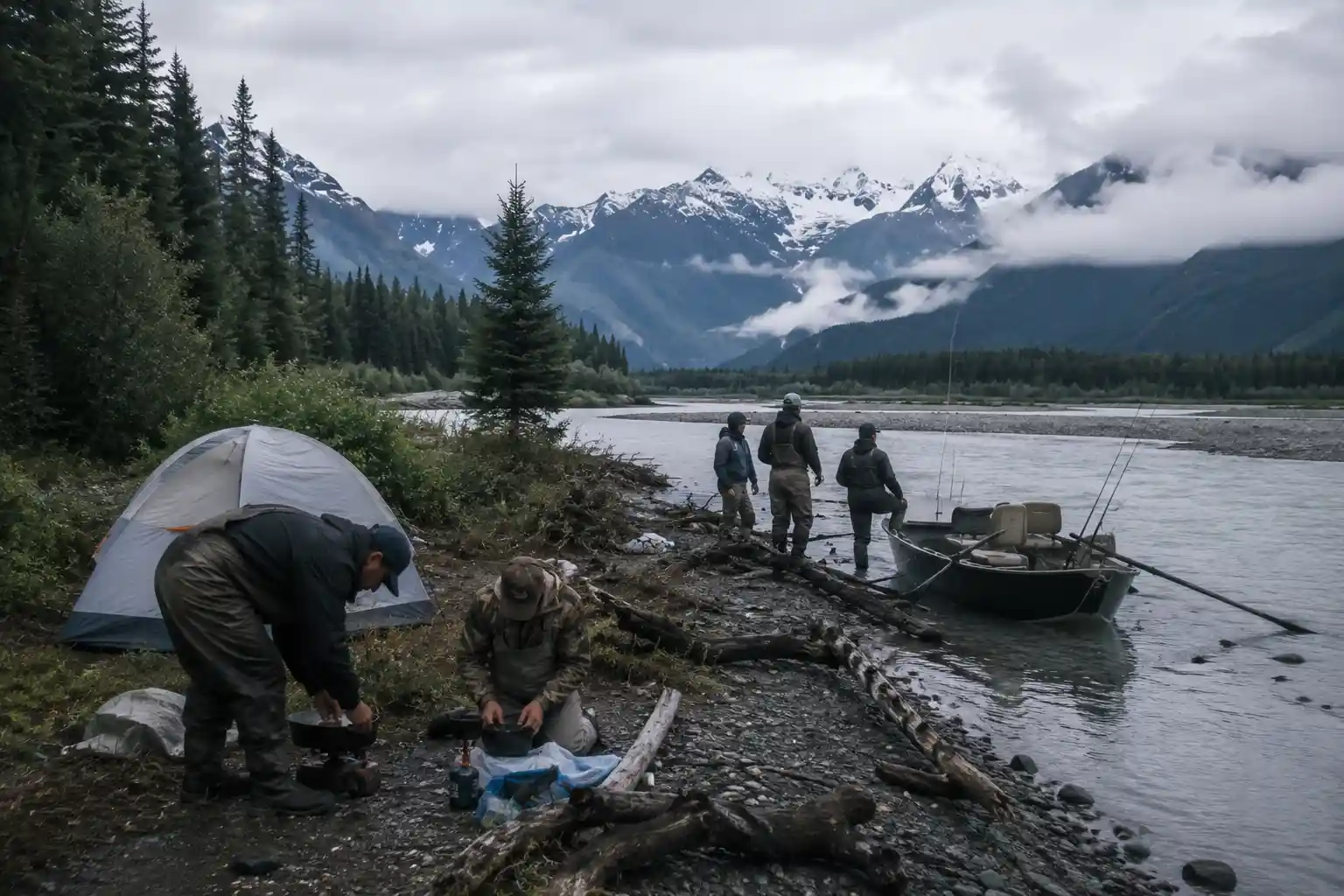
For anglers around the world, Alaska represents the ultimate fishing destination.
Massive King Salmon, hard-fighting Silver Salmon, trophy halibut, Arctic char, rainbow trout, and untouched wilderness combine to create an experience unlike anywhere else on Earth. Few places offer the same combination of remote scenery, abundant fish populations, and true adventure.
But once travelers begin researching Alaska fishing trips, one thing quickly becomes obvious:
The pricing can vary dramatically.
Some packages advertise weeklong DIY fishing trips starting around $1,500, while luxury fly-in lodges can exceed $15,000 per person.
That enormous pricing gap leaves many anglers asking the same question:
What exactly is the difference between a DIY Alaska fishing trip and a premium guided fishing package?
The answer goes far beyond accommodations.
The type of fishing package you choose affects:
- Fishing success rates
- Access to remote waters
- Comfort and convenience
- Safety
- Fish processing quality
- Travel logistics
- Overall trip stress
In this complete 2026 Alaska fishing price guide, we break down the real costs of DIY trips, guided fishing charters, and all-inclusive lodges so you can decide which option fits your budget, experience level, and travel goals.
Why Alaska Fishing Trips Cost So Much
Before comparing trip styles, it is important to understand why Alaska fishing trips are expensive in the first place.
Alaska is one of the most remote and logistically challenging travel destinations in North America.
Operating fishing charters and lodges requires:
- Commercial permits
- Specialized boats
- Fuel transportation
- Float planes
- Experienced guides
- Safety equipment
- Fish processing facilities
- Seasonal staffing
- Remote infrastructure
Even basic operations become expensive due to Alaska’s geography.
A gallon of fuel, a shipment of food, or a replacement boat part may require air transport into isolated wilderness areas.
Weather delays also impact operations constantly.
Because of this, quality Alaska fishing experiences naturally cost more than standard fishing vacations elsewhere.
Understanding the Three Main Types of Alaska Fishing Trips
Most Alaska fishing vacations fall into three primary categories:
- DIY (Do-It-Yourself) Fishing Trips
- Guided Charter Combination Trips
- All-Inclusive Fly-In Fishing Lodges
Each option offers a very different experience.
Choosing the right one depends on:
- Budget
- Fishing skill level
- Desired comfort
- Planning ability
- Travel expectations
Option 1: The DIY Alaska Fishing Trip
The DIY approach is the cheapest way to experience Alaska fishing.
This style of trip involves arranging everything independently.
You typically:
- Book your own flights
- Rent a vehicle
- Reserve lodging
- Purchase fishing licenses
- Find public fishing access
- Bring or rent your own gear
- Handle your own fish processing
DIY fishing appeals to experienced anglers who enjoy independence and flexibility.
Best For
- Budget-conscious travelers
- Experienced anglers
- Repeat Alaska visitors
- Adventurous travelers
- Anglers comfortable reading maps and water systems
Typical DIY Trip Costs (2026)
For a 5-day trip, most DIY travelers spend approximately:
- Flights: $600–$1,200
- Lodging: $150–$300 per night
- Rental car: $100–$150 per day
- Fishing license/stamps: $100–$200
- Food and supplies: $300–$500
- Gear rentals or baggage fees: $200–$500
- Fish processing: Variable
Estimated total:
$1,500–$2,500+ per person
Advantages of DIY Fishing
Lower Overall Cost
DIY trips are significantly cheaper than full-service packages.
Total Schedule Flexibility
You control:
- Wake-up times
- Fishing locations
- Daily pacing
- Meal planning
- Rest days
More Independence
Some anglers genuinely enjoy the challenge of finding productive water themselves.
The “hunt” becomes part of the adventure.
Downsides of DIY Fishing
Steep Learning Curve
Alaska fisheries are complex.
Without local knowledge, anglers may spend valuable days fishing unproductive water.
Increased Planning Stress
DIY trips require extensive coordination.
You must personally handle:
- Logistics
- Navigation
- Equipment
- Weather changes
- Regulations
- Fish transportation
Limited Access
Many of Alaska’s best fisheries are inaccessible by road.
DIY travelers often miss remote high-quality waters.
Who Should Avoid DIY Trips?
DIY fishing may not be ideal for:
- First-time Alaska visitors
- Families
- Inexperienced anglers
- Travelers uncomfortable with remote logistics
- Guests with limited vacation time
If you only have a few fishing days available, relying entirely on DIY exploration can become risky.
Option 2: Guided Charter Combination Trips
This is often considered the “sweet spot” for most Alaska travelers.
Combination trips mix independent exploration with professionally guided fishing days.
A typical setup might include:
- Staying in a rented cabin or lodge
- Fishing independently on some days
- Booking 2–3 professional guided charters
This hybrid model balances affordability with expert instruction.
Best For
- Most recreational anglers
- Couples
- Small groups
- First-time Alaska visitors
- Travelers wanting both freedom and guidance
Typical Guided Combination Trip Costs (2026)
Estimated costs for 5–7 days:
- Lodging: $250–$500 nightly
- Guided charter days: $350–$600 per day
- Transportation: Variable
- Licenses and stamps: $100–$200
- Food and incidentals: Variable
- Fish processing: Variable
Estimated total:
$3,000–$4,500 per person
Advantages of Guided Combination Trips
Higher Fishing Success Rates
Professional guides dramatically improve your odds of success.
Experienced captains know:
- Fish migration timing
- Productive tides
- Water conditions
- Local hotspots
- Proper techniques
Skill Development
Guides teach valuable skills such as:
- Reading rivers
- Selecting lures
- Boat positioning
- Fighting fish
- Safety techniques
More Balanced Experience
You still enjoy flexibility during self-guided days while benefiting from expert support during charters.
Downsides of Guided Combination Trips
More Planning Complexity
You must coordinate lodging, charters, transportation, and timing separately.
Costs Add Up Quickly
Although cheaper than luxury lodges, charter days can still become expensive.
Why This Option Is Popular
Combination trips offer excellent value because they maximize learning opportunities without requiring luxury-level budgets.
For many travelers, this is the ideal middle ground.
Option 3: All-Inclusive Fly-In Fishing Lodges
This is Alaska fishing at the highest level.
Guests typically:
- Fly into a regional hub
- Board a float plane
- Travel to a remote wilderness lodge
- Spend several days fishing private or remote waters
Everything is bundled into one package price.
This often includes:
- Lodging
- Meals
- Guides
- Boats
- Fish processing
- Transportation between fishing zones
Best For
- Serious anglers
- Luxury travelers
- Bucket-list fishing trips
- Corporate retreats
- Travelers wanting zero logistical stress
Typical All-Inclusive Lodge Costs (2026)
For a 7-day trip:
- Standard lodges: $8,000–$12,000
- Premium luxury lodges: $12,000–$15,000+
- Ultra-exclusive private lodges: Higher
Advantages of Fly-In Lodges
Access to Remote Fisheries
This is the single biggest advantage.
Remote fly-in lodges access waters that road-based anglers simply cannot reach.
These areas often produce:
- Larger fish
- Less fishing pressure
- Better scenery
- Higher catch rates
Minimal Stress
Everything is handled for you.
You simply show up and fish.
High-End Service
Premium lodges often provide:
- Gourmet meals
- Professional fish handling
- Comfortable accommodations
- Luxury amenities
- Personalized guide service
Downsides of Fly-In Lodges
Extremely Expensive
This is the biggest barrier for most travelers.
Less Flexibility
Packages usually follow fixed schedules and structured itineraries.
Understanding Hidden Costs
One of the biggest mistakes travelers make is only comparing advertised package prices.
Many “cheap” packages exclude major essentials.
Always ask about:
- Fish processing
- Gear rentals
- Airport transfers
- Fuel surcharges
- Alcohol
- Fishing licenses
- Gratuities
- Extra charter hours
Small add-ons can quickly increase final costs.
Lodging Costs Explained
Lodging varies significantly across Alaska.
Budget options include:
- Motels
- Shared cabins
- RV parks
Premium options include:
- Riverfront cabins
- Boutique lodges
- Wilderness resorts
Remote areas naturally cost more due to transportation challenges.
Fish Processing Costs
Taking home fresh Alaska fish is one of the highlights of the trip.
However, many travelers underestimate processing costs.
Typical processing services include:
- Filleting
- Vacuum sealing
- Flash freezing
- Boxing for airline transport
Average pricing:
$1.50–$2.50 per pound
Large catches can create surprisingly large processing bills.
Shipping Fish Home
Shipping frozen fish is another major expense.
Depending on weight and destination:
- Airline baggage fees may apply
- Overnight shipping can exceed $250+ per box
Premium lodges often include fish handling in their packages, which can save substantial money and hassle.
Red Flags to Watch for When Booking
“All-Inclusive” That Isn’t Actually Inclusive
Some lodges advertise all-inclusive pricing while excluding essentials like:
- Fish processing
- Equipment
- Transportation
- Dock access
Always ask for a detailed breakdown.
Overcrowded Lodges
Large operations sometimes host 30–50 guests simultaneously.
This can create:
- Crowded fishing areas
- Long wait times
- Less personalized service
- “Factory” atmosphere
Smaller owner-operated lodges usually provide better experiences.
Vague Guide Credentials
Statements like:
“We arrange guides.”
are not reassuring.
You want details about:
- Experience
- Certifications
- Local expertise
- Years guiding specific waters
Poor Fish Handling Practices
Fish quality depends heavily on immediate care after landing.
Poor processing can ruin otherwise excellent catches.
DIY vs Guided: Which Option Is Best?
Choose DIY If:
- You are highly experienced
- You enjoy planning
- You want maximum flexibility
- You are traveling on a tighter budget
Choose Guided Combination Trips If:
- You want balanced value
- You appreciate local expertise
- You want flexibility with support
- You are visiting Alaska for the first time
Choose Fly-In Lodges If:
- Budget is less important
- You want elite fishing access
- You prioritize comfort and convenience
- You want a premium wilderness experience
The Importance of a Great Guide
If your budget is limited, prioritize spending money on quality guides rather than luxury lodging.
A professional guide can teach you:
- River reading
- Proper lure selection
- Fish behavior
- Local regulations
- Safety procedures
Good guides dramatically increase both success and enjoyment.
Even modest accommodations become worthwhile if the fishing experience itself is exceptional.
Best Time to Book Alaska Fishing Trips
Top lodges and charters often sell out many months in advance.
For 2026 trips:
- Peak salmon season books earliest
- Halibut charters fill quickly
- Premium lodges may require 12+ months advance booking
Booking early improves:
- Date flexibility
- Flight pricing
- Lodge selection
- Guide availability
Conclusion: Choose the Experience That Matches Your Goals
Alaska fishing is not one-size-fits-all.
Some anglers dream of rugged DIY exploration. Others want fully guided luxury adventures in remote wilderness.
Neither option is inherently better.
The key is choosing the experience that matches your:
- Budget
- Skill level
- Expectations
- Comfort preferences
- Adventure goals
DIY trips offer freedom and affordability but require significant planning and local knowledge.
Guided trips provide education, support, and dramatically higher success rates.
Luxury fly-in lodges deliver unmatched access and convenience for travelers willing to invest heavily in the experience.
No matter which route you choose, Alaska offers some of the finest fishing opportunities on Earth.
The right planning ensures your investment becomes an unforgettable adventure rather than an expensive disappointment.